
Two Devils Wear Prada
Andy didn’t escape Miranda. She became her.

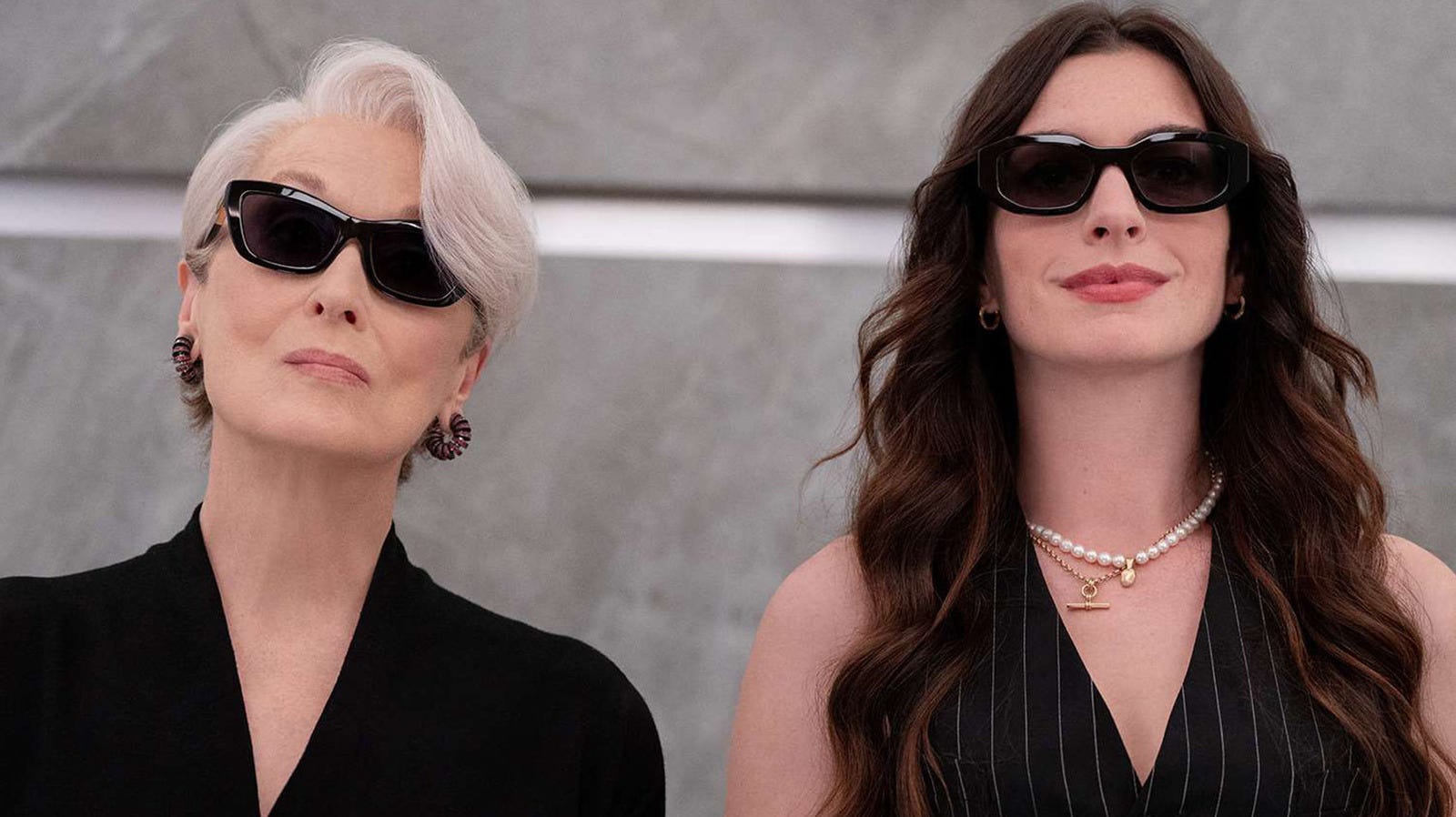
There’s something immediately disappointing about The Devil Wears Prada 2, and it starts—and frankly ends—with Andy Sachs.
Not because she’s unlikable. Not because she’s ambitious. But because, 20 years later, she seems to have learned absolutely nothing about herself.
That’s the real problem here.
Andy Sachs: The Arc That Disappeared
In the original The Devil Wears Prada, Andy (Anne Hathaway) had a clear arc. She was pulled into a world she didn’t respect—until she was seduced by it. And then—crucially—she chose to walk away. Andy released the couture clothes from Paris Fashion Week—the ultimate symbol of status, access, and success in that world. She knew what she was doing—choosing values over rewards.
That awareness mattered.
Now? It’s gone.
We meet Andy decades later, and she’s somehow both more successful and less self-aware. She went the investigative journalism route, only to return to Runway under the guise of “helping” Miranda.
But let’s be honest—this isn’t altruism.
Andy is right back where she started: trying to please Miranda, only this time she’s convinced herself it’s for noble reasons. Meanwhile, she’s securing her place in a system she once rejected.
She hasn’t evolved. She’s rationalized.
Success Without Self-Awareness
The film wants us to believe Andy is still grounded. Still “that girl.”
But the details tell another story.
The modest apartment she once held onto as a symbol of her integrity is replaced the moment she re-enters Runway’s orbit. A new salary. A new apartment. A new standard of living. With that comes dependency, because now she needs this version of her life to continue. When Runway is threatened, Andy doesn’t just respond—she mobilizes. Strategizes. Intervenes.
The film frames this as loyalty. It plays more like self-preservation.
And what’s missing—again—is the moment where Andy recognizes that for herself.
Miranda in the Age of Optics
Miranda Priestly (Meryl Streep) is still formidable—but noticeably restrained. Not because she’s changed at her core, but because the world has changed around her.
Optics matter. HR enforces. Miranda is more measured, more careful not to offend. She hangs up her own coat. She tempers her tone. It’s almost ironic, given how little restraint we see in public life and media, that this is where the film draws its line.
Nevertheless, Miranda remains intact in the ways that matter. She knows who she is. She understands the cost of her ambition—failed marriages, personal sacrifice—and she accepts it. There’s no illusion there.
Andy, on the other hand, is living a version of that same life without ever naming it.
Print, Power, and the Performance of Purpose
The film’s most relevant thread is also its most underdeveloped: the evolution of media.
Runway is no longer just a magazine—it’s an asset. A brand to be acquired, reshaped, or discarded. Print versus digital becomes less about format and more about survival.
That tension feels real.
It directly connects to Andy’s own trajectory. She initially left Runway to pursue work rooted in substance, integrity, and purpose. What happened next? That world collapsed. The stability of print journalism disappeared. The idealism she once clung to was no longer sustainable.
Andy returns to the very world she once escaped, making her relationship to Runway more complicated than the film seems willing to admit. This isn’t just about loyalty to Miranda or passion for the magazine. It’s about survival—returning to one of the few institutions in media that apparently still offers power, money, influence, and stability.
That’s what makes Andy’s choices more revealing.
Her decision to broker a deal—looping in Emily (Emily Blunt) and a billionaire buyer behind Miranda’s back—is framed as initiative. But it’s also convenient, because by then Andy has something to protect.
When she fights to “save” Runway, the question lingers: Is she protecting the institution… or her place within it?
The film never asks.
The Book Deal: Loyalty for Sale
Then there’s the tell-all.
Andy is presented with the opportunity to write a book about Miranda—a behind-the-scenes exposé—and initially, she hesitates. Out of loyalty. Out of principle.
At least, that’s what we’re told.
But she writes the proposal anyway—for a $350,000 advance.
While Andy positions herself as Runway’s savior, she’s also quietly preparing to profit from Miranda’s story.
That’s not complicated.
That’s two-faced.
The film gets dangerously close to something meaningful here. Andy should be forced to confront herself: What are you doing? Who are you serving? What are your priorities?
Instead, Miranda finds out—and blesses the project, reframing it as a cautionary tale. And just like that, the tension disappears.
Imagine the alternative: Miranda makes Andy choose—Runway or the book.
Loyalty or leverage.
That dilemma would’ve required deep soul-searching.
Instead, Andy moves forward unchallenged.
The Personal Cost (That No One Mentions)
Andy’s personal life reflects the same pattern. She’s single. Relationships haven’t lasted, but the film never asks why. Instead, we get Peter—the contractor who renovates old buildings into high-end living spaces.
A metaphor that, despite being completely on-the-nose, the film still feels the need to beat us over the head with.
Because that’s what everyone in this movie is trying to do—take something old and make it viable in a changed world.
Runway is a legacy print institution struggling to survive in a digital media landscape that no longer values the thing it was originally built to do.
Miranda is still powerful and sharp, but now carefully managing herself in a culture obsessed with performative civility.
And whether Andy wants to admit it or not, she’s doing the same thing.
The difference is that Peter understands renovation as practical.
Not moral. Not ideological. Practical.
Markets change. Industries change. Survival requires adaptation. That’s his worldview.
Which is exactly why Andy recoils when Peter compares his work to what she’s experiencing at Runway. He unintentionally strips away the illusion Andy desperately wants to maintain—that her choices are somehow more principled than everyone else’s.
But they aren’t.
So, when Peter tries to relate to her, she treats his comparison like an insult rather than an insight.
Accepting what he’s saying would require acknowledging the one thing the film keeps avoiding: Andy’s choices are driven not just by passion or integrity—but by ambition, comfort, survival, and practicality.
Miranda knows this about herself.
Peter understands this plainly.
Andy cannot bear to see herself that clearly.
Nigel: The Story the Film Avoids
Nigel (Stanley Tucci) is right there. He should have been the most compelling force in the film. Unlike Emily—whose dismissal happens offscreen—Nigel’s betrayal is something we experienced. We saw the cost. We understood what was taken from him.
How does that not linger? How does that not evolve into something sharper—more strategic, more dangerous?
Nigel wasn’t just part of Runway. He was essential to it. The taste. The vision. The reason it worked. A man like that would be in demand. This makes his continued presence even more unsettling.
Maybe he didn’t just stay.
Maybe he was kept.
Not elevated. Not made a partner. Just indispensable enough to remain—but never enough to leave.
That dynamic—power, loyalty, resentment—is rich with possibility.
And the film leaves it untouched.
Emily Isn’t the Devil—And That’s the Point
Emily (Emily Blunt) makes a power move in this film—aligning herself with a billionaire boyfriend to position herself for control of Runway. On paper, it’s ruthless. But it’s also revealing.
Emily doesn’t actually do the work of power—she outsources it. Her influence comes through proximity, through access, through someone else’s leverage.
Andy operates differently. When Runway is on the brink of nonexistence, she doesn’t wait for power—she exercises it. She gets in the trenches, brokers the deal, navigates the chaos, and moves pieces into place herself.
Emily plots betrayal. Andy executes.
That distinction matters because it explains something the film never says outright:
Emily wanted the world of Runway.
Andy learned how to function inside it.
When we ask who the “devils” are in this story, Emily doesn’t quite qualify. Though her actions were openly treacherous, she doesn’t have the range to pull it off.
Andy does. She has the ambition, the adaptability, and the competence to shape outcomes—and the ability to justify it all as something else.
This makes Andy far more effective and a greater force to be reckoned with.
So—Who’s the Devil?
By the end, the answer is sitting in plain sight.
Andy is decisive. Strategic. Fully capable of manipulating outcomes to serve her needs—whether that means saving Runway or selling Miranda’s story.
She’s not outside the system anymore. She is the system.
The difference is, Miranda owns it. Andy performs around it.
Which brings us back to the question hovering over the entire film: If Miranda is the devil we recognize…
What do we call the devil who still thinks she’s the hero?
This was a very interesting perspective about the film because Andy seemed to have gotten the arc of a being this self-righteous, "bright-eyed" soon to be journalist, with aspirations to work for a reputable publication. All she needed was a "big break". When she eventually decides into the world of fashion we watch her ingratiate herself with no hesitation. Reading this recent synopsis of the sequel, it kind of makes you wonder if Andy was this person all along, and not the naive "I just want do the right thing and pursue journalism", that we originally met? Did the world of journalism change Andy or did it bring out who Andy was all along?